



The basic function of the fixed element (guide rail) of the linear slide rail system is like a bearing ring. The bracket for mounting the steel ball is V-shaped. The bracket wraps the top and sides of the guide rail. In order to support the working parts of the machine tool, a set of linear slide rails has at least four brackets. In order to support large working parts, the number of brackets can be more than four.
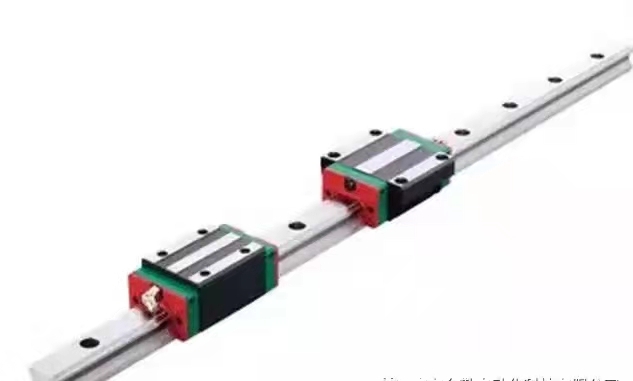
Linear slide manufacturers believe that when the working parts of the machine tool move, the steel ball is in the groove of the support for domestic circulation, and the wear of the support is distributed to each steel ball, thus prolonging the service life of the linear slide rail. In order to eliminate the gap between the bracket and the guide rail, the pre-tightening force can improve the stability of the guide rail system. Preload is obtained by installing an oversized steel ball between the guide rail and the bracket. The steel ball diameter tolerance is 20mm, and the steel balls are sorted in increments of 0.5mm, and then installed on the guide rail separately. The preload depends on the force acting on the steel ball. If the force acting on the steel ball is too large and the preloading time is too long, causing the support movement resistance to increase, there will be a problem of balance; in order to improve the sensitivity of the system and reduce the movement resistance, the preload force should be reduced accordingly, and in order to improve the movement accuracy and accuracy maintenance, it is required to have enough negative preload force, which are two contradictory aspects.
Linear slide manufacturers believe that if the working time is too long, the steel ball starts to wear out, and the pre-tightening force acting on the steel ball starts to weaken, resulting in a decrease in the movement accuracy of the machine tool parts. If the initial accuracy is to be maintained, it is necessary to replace the guide bracket or even the guide rail. If the guide system has been preloaded. The system accuracy has been lost, only the rolling elements can be replaced.
Linear slide manufacturers believe that the guide rail system is designed to have a large contact area between fixed elements and moving elements, which can not only improve the bearing capacity of the system, but also withstand the impact force generated by intermittent cutting or gravity cutting, widely disperse the force, and expand the bearing area. In order to achieve this, there are grooves of various shapes in the guide rail system, and there are two representative ones. One is called Gothic (pointed arch), which is an extension of a semicircle with the contact point as the vertex; the other is a circular arc, which can also play the same role. No matter which structural form, there is only one purpose. More rolling ball radii should be in contact with the guide rail (fixed element). The factor that determines the performance characteristics of the system is how the rolling element contacts the guide rail, which is the key to the problem.
Linear slide rails are mainly used in mechanical structures with high precision requirements. Rolling steel balls are used to replace the intermediate medium between the moving elements and the fixed elements of the linear slide rails. Since the rolling steel ball is suitable for high-speed movement, the friction coefficient is small and the sensitivity is high, it can meet the working requirements of moving parts, such as machine tool holders, processing editing and analysis trailers, etc. If the force acting on the steel ball is too large, the steel ball will bear the pre-tightening force for too long, which will lead to the movement resistance of the support.
The above are some knowledge points about linear slide rails. I hope you can study the relevant knowledge carefully, choose the products and equipment that suit your needs, and ensure your own benefits. If you want to know more details, you can contact us. I believe we can give you a satisfactory answer.