



Linear slide rails can be divided into three types: roller linear slide rails, cylindrical linear slide rails and ball linear slide rails, which are used to support and guide moving parts to reciprocate in a given direction. According to the friction properties, linear slide rails can be divided into sliding friction rails, rolling friction rails, elastic friction rails and fluid friction rails.
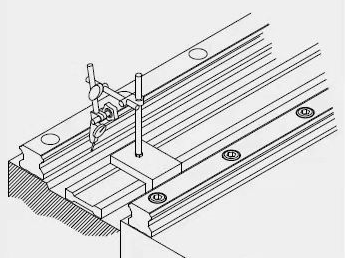
The function of the linear slide is to support and guide the moving parts, and do reciprocating linear slide rails in a given direction. According to the friction properties, linear slide rails can be divided into sliding friction rails, rolling friction rails, elastic friction rails and fluid friction rails. Linear bearings are mainly used in automated machinery, such as machine tools, bending machines, laser welding machines imported from Germany, etc. Of course, linear bearings and straight shafts are matched. Linear slide rails are mainly used in mechanical structures with high accuracy requirements. Rolling steel balls are used to replace the intermediate medium between the moving elements and fixed elements of the linear slide rails.
The working principle of the linear slide rail can be understood as a kind of rolling guide rail, that is, the steel ball rolls endlessly between the slider and the guide rail, so that the load platform can easily carry out high-precision linear slide rail along the guide rail. The friction coefficient can be reduced to one-fiftieth of the usual traditional sliding guide rail, which can easily achieve high positioning accuracy. The final unit design between the slider and the guide rail makes the linear slide rail bear the load in all directions, such as up, down, left, right, etc. The patented return system and simplified structural design make the linear slide rail of HIWIN move more smoothly and with low noise.
Move the slider from the curve to the straight line. The new guide system allows the machine to obtain a faster feed speed, which is the characteristic of the linear slide when the spindle speed is the same. Like the plane guide, the linear guide has two basic elements: one is a fixed element as a guide, and the other is a moving element. Since the linear slide is a standard part, all the machine tool manufacturer has to do is to machine a plane where the guide is installed and adjust the parallelism of the guide.
Installation points of linear slides:
1. Before installing the linear slide rail, carefully check and clean the burrs and dirt on the installation mechanical workbench. Since the linear slide rail is coated with anti-rust oil, please wipe it with cleaning oil before installation. After the anti-rust oil is removed, the reference surface is prone to rust. It is recommended to apply low viscosity lubricating oil to the spindle.
2. After gently placing the linear guide rail on the base, the assembly bolt is not completely locked, so the linear guide rail and the mounting surface are gently pressed against each other. (The horizontal reference plane of the base should be aligned with the marked side of the linear guide rail. Please use clean mounting bolts to fix the linear slide rail. At the same time, when inserting the assembly bolt into the mounting hole of the linear slide rail, it is necessary to confirm in advance whether the bolt holes are consistent. If the holes do not match, the bolt is forcibly screwed in, and the accuracy will be reduced.
3. Tighten the stop screws of the linear rail in turn, so that the rail is close to the transverse mounting surface. According to the specified torque, use a torque wrench to tighten the mounting bolts. The tightening sequence of the bolts of the linear rail assembly is from the center position to the end of the shaft for stable accuracy.
4. The remaining linear guides are also installed in the same manner until the installation is complete.
5. Push the hole cover into the assembly bolt hole until it is in the same plane as the top surface of the linear guide.