



Miniature linear slides are currently widely used in small circular motion vehicles. Its main feature is the use of steel balls to wirelessly roll between the slide rail and the slider, so that the slider can easily move in a straight line along the slide rail, with extremely low resistance and high stability. Currently mainly used in automated assembly equipment, measuring instruments and business equipment with high precision requirements. According to user requirements, the slider that is mainly responsible for carrying the workpiece extends out in various forms and shares the same slide rail.
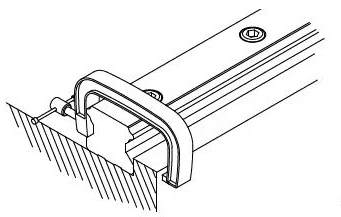
In recent years, with the development of biological and medical science and technology, scientific and technological products have been refined and miniaturized. However, with the characteristics of high corrosion resistance of stainless steel, the single-cycle design has reduced the size, which can fully meet the demand and gradually increase the market momentum of micro-rails.
A linear slide rail is a type of ball guide rail. Through the infinite rolling cycle of the steel ball between the slide block and the slide rail, the load platform can easily perform high-precision linear motion along the slide rail. Compared with the traditional sliding guide, the friction coefficient of the rolling guide can be reduced to 1/50 of the original. Due to the greatly reduced starting friction and relatively few ineffective actions, it is easy to achieve um-level feed and positioning. Coupled with the design of the bonding unit between the slide block and the slide rail, the linear slide rail can simultaneously bear the load in all directions such as up, down, left, right, etc. The above display characteristics cannot be compared with the traditional sliding guide. Therefore, if the machine can cooperate with the ball screw and use the linear slide rail as the guide rail, the equipment accuracy and mechanical flow will be greatly improved.
When the linear slide rail is used as the linear guide rail, because the friction mode of the linear slide rail is rolling friction, not only the friction coefficient is reduced to 1/50 of the sliding guide rail, but also the gap between the dynamic friction and the static friction becomes very small. Therefore, when the bed rod is running, there will be no slipping phenomenon, and the positioning accuracy of the um level can be achieved.
The traditional sliding guide will inevitably cause poor movement accuracy of the platform due to the backflow of the oil film. Insufficient lubrication during movement will cause wear on the contact surface of the running track, which seriously affects the accuracy. The wear of the rolling guide is very small, so the machine can maintain the accuracy for a long time.
Since the linear slide rail has little friction when moving, the bed can run with less power, especially if the bed runs back and forth regularly, which can significantly reduce the power consumption of the machine. And the heat generated by friction is small, which is suitable for high-speed operation.
Due to the special bundle structure design of the linear slide rail, it can simultaneously withstand loads in the upper, lower, left and right directions, unlike the sliding guide rail, which can only withstand slight lateral loads in the direction of the parallel contact surface, which easily results in poor machine operation accuracy.
When assembling, simply milling or grinding the assembly surface of the slide rail on the bed table and fixing the slide rail and slider to the bed table with a specific torque according to the recommended steps can reproduce the high precision in machining. In traditional slide guides, the running track needs to be shoveled, which is time-consuming and laborious, and once the machine's accuracy is poor, it must be re-shoveled. Linear slides are interchangeable, and sliders or slides or even linear groups can be replaced separately, so that the machine can regain high-precision guidance.