



Linear bearings generally refer to the bearing block on the linear optical axis (including the sliding unit of the bearing housing assembly and the flange-type guide shaft support). The guide rail slider refers to the rolling assembly unit on the linear guide rail and the linear slide rail. There are differences in structure between the two. The guide rail slider and the linear bearing are basically two product accessories. There are obvious differences between the appearance of the linear bearing and the appearance of the guide rail slider: the guide shaft of the linear shaft bearing is in the shape of a drum; while the guide rail slider shaft is a square structure.
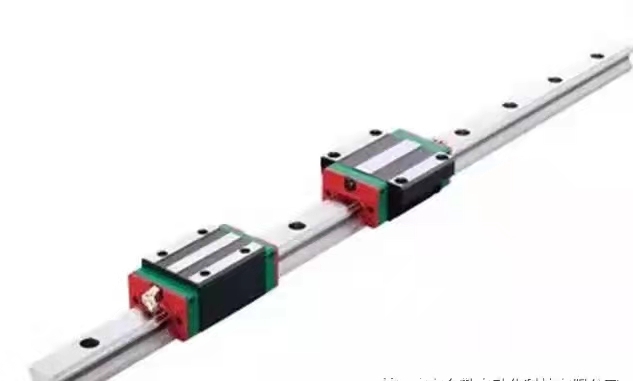
Linear bearings are used in combination with linear bearings and cylindrical shafts. Due to the contact between the bearing ball and the bearing jacket point, the steel ball rolls with minimal friction resistance, so the linear optical axis has little friction and is relatively stable. It does not change with the bearing speed, and can achieve smooth linear motion with high flexibility and high precision. Linear optical axis consumption also has its limitations. The most important thing is that the impact load capacity of the linear bearing is poor, and the bearing capacity is also poor. Secondly, the linear bearing vibrates and noises more when moving at high speed.
Linear bearings and guide rail sliders have similar functions, both supporting and guiding, and the main difference lies in the device location: linear bearings are usually fixed at both ends, and the middle suspended connecting parts cover all or most of the radial axis of the optical axis; guide rail sliders are usually all close to the base of the equipment and are fixed with bolts.