



When the linear guide is used, there are various forms of load, and the difference in load directly affects the number of sliders selected. The following is a more typical case where the guide rail is installed on the horizontal plane and the guide rail is below and the slider is above. The slider accepts the load acting directly above it (such as the component of the worktable). Since the device surface of a single slider is small, when the mass center of the load is just at the center of the slider, the load can be simplified into a concentrated force.
The problems often encountered are: on the one hand, the size of the workbench of the device above the slider is much larger than the size of the slider, on the other hand, the execution organization of the workbench and the device above it is often a partial structure, and the mass center of the load is not just located in the center of the slider. Assuming that the load has a certain partial pain along the length of the guide rail, in this case, the slider not only accepts the gravity of the load, but also accepts the torque load in the MA direction due to the partial load. Under the action of this torque, the load is later transmitted to the balls inside the slider, and some balls will accept a large local load. Working in this state for a long time will cause abnormal wear of the balls, reduce the service life of the slider, and then reduce the service life of the organization. In addition to the load with the above-mentioned mass bias, the inertial force during the acceleration and deceleration of the load will also generate a torque load similar to the above-mentioned effects.
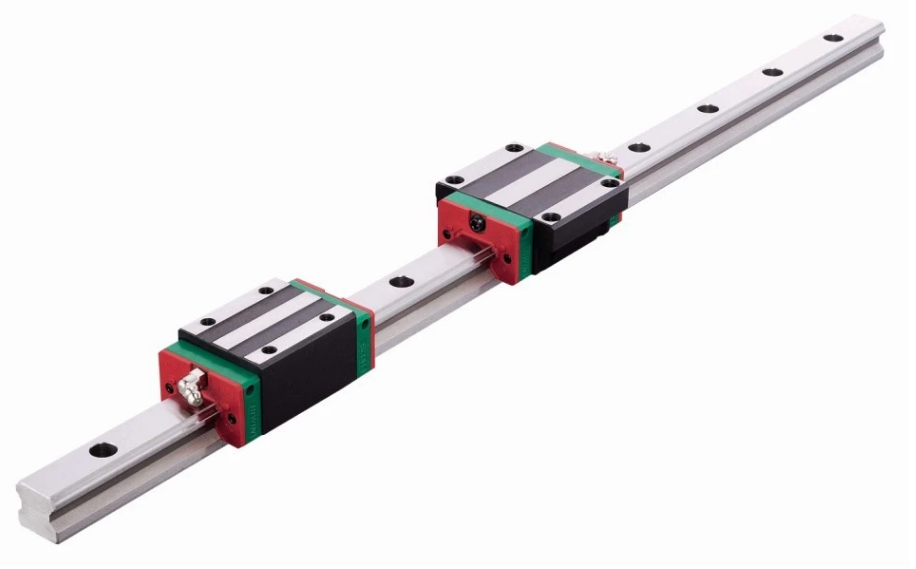
In addition, the performing tissue above the slider may also generate additional torque in the MA or M. direction when working. If two sliders are used at a distance on one rail along the length direction, the original migraine structure becomes a balanced structure, which not only reduces or eliminates the torque load caused by the migraine structure to the slider, but also improves the ability of the linear guide tissue to accept additional torque in the Mn direction, thus improving the rated life of the entire tissue, which is why double sliders are used in most cases.